
命中注定我爱你
农业法修订草案二审 拟完善农民权益保护_我的网站

一 | 中新网北京8月25日电(记者 郭超凯 李京泽)农业法修订草案25日提请十四届全国人大常委会二次审议。
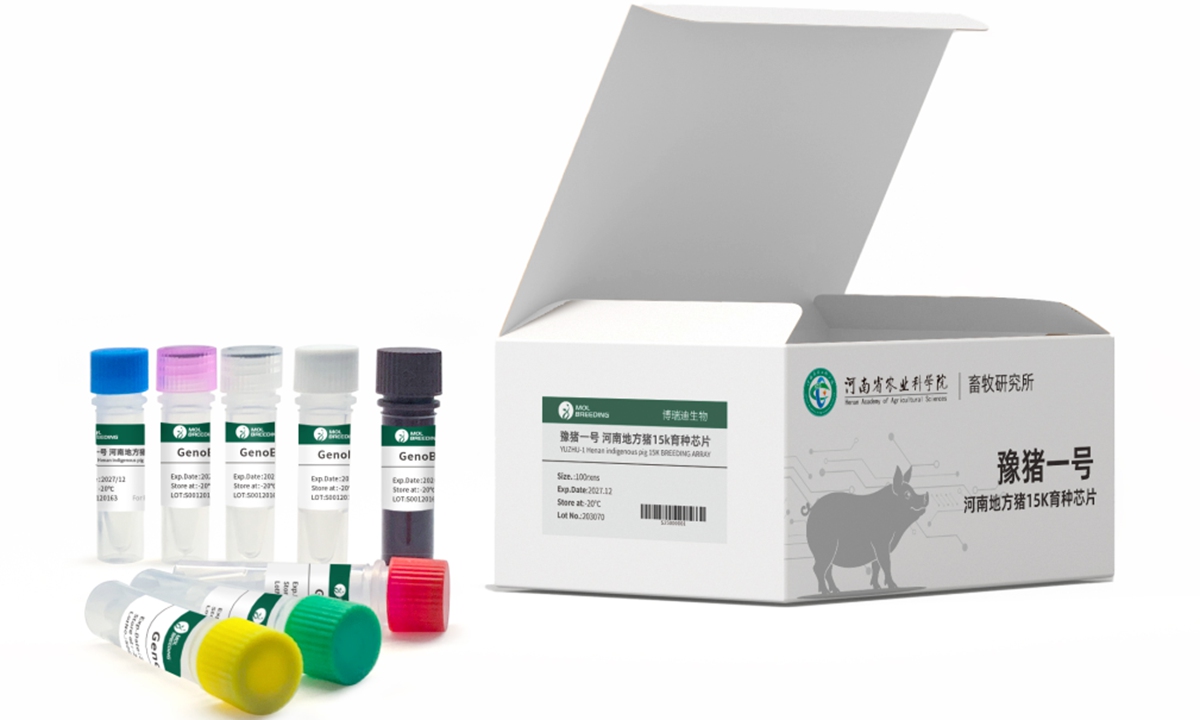
China's largest pork-producing province has introduced a genomic breeding tool designed for indigenous pig breeding, a sign that the province is shifting from expanding volume toward improving hog quality.
The Henan Academy of Agricultural Sciences announced the launch of Yuzhu-1 Henan indigenous pig 15k breeding array - commonly known as a gene chip - developed by the pig breeding team at its Institute of Animal Husbandry and Veterinary Science. It is the first such tool customized for the province's native pig stock, the institute said on Monday.
Henan is home to multiple native pig breeds prized by consumers for their good flavor. However, they carry a commercial burden compared with imported lean-meat breeds, as they grow more slowly, consume more feed per kilogram of weight gain and deliver thinner margins, noted Xing Baosong, head of the pig research office at the institute.
Lifting those hurdles depends on sharper selection, which in local herds has long relied on visual assessment of physical traits, which is slow and imprecise. Genomic tools can speed things up, but mainstream commercial chips were built on imported breeds and lose accuracy on native Chinese stock. Yuzhu No 1 instead draws on whole-genome resequencing data from five of Henan's native pig breeds and two locally bred lines.
"In breeding we rely on estimated breeding values to judge an animal's genetic potential," Wang Ligang, a professor at the Institute of Animal Sciences under the Chinese Academy of Agricultural Sciences, told the Global Times on Monday. "An array matched to the breed makes that estimate more accurate. Previously there was a real chance we were selecting the wrong animals. Now we are far more likely to be selecting the right ones - and to select accurately for the traits a breed is known for, whether that is tender meat or high fertility."
The efficiency gap between native and imported pig breeds remains wide, said Wang, who is also with the Pig Branch of the Chinese Association of Animal Science and Veterinary Medicine. Feed conversion ratios for local Chinese pigs run around 3.0, against below 2.5 for imported breeds, while reaching 100 kilograms takes native pigs 180 to 190 days compared with 130 to 140 days for exotic lines, he said.
Despite this, China's native pig breeds have their advantages.
"Our pigs taste better, partly because they are raised longer," Wang said. "And they are far more robust. Exotic breeds can suffer heat stress and die in summer; when disease hits, they can go down in large numbers. Local pigs rarely do. They tend to recover. Some breeds in Northeast China can even tolerate severe cold."
He added that imported breeds drive efficiency, while native breeds ensure quality and offer a reservoir of genetic diversity for disease and stress resistance - traits that can be bred back into commercial lines.
The province slaughtered 64.74 million pigs in 2025, up 7.4 percent year on year, with pork output at 5.22 million tons, according to the provincial statistics bureau, making it the top pork and pig producer nationwide, according to industry statistics.
In the first half of 2026, pig slaughter in the province rose a further 6.4 percent, accelerating 5.3 percentage points from the first quarter, against national growth of 1.7 percent. Xing said that more high-quality local black pigs will reach the market as Yuzhu No 1 is applied more broadly.
Other major pig production provinces such as Southwest China's Sichuan, Northwest China's Shaanxi and South China's Yunnan have all developed their own arrays.
"Provinces with the most developed pig production are the ones pushing upmarket," Wang said. "Scale is no longer the only measure. If every province reaches this level, a pattern of one dedicated array per province could gradually take shape for China's native breeds."
。修订草案二审稿拟完善农民权益保护内容,规定各级人民政府应当建立健全整治形式主义为基层减负长效机制。 修订草案二审稿还明确,设区的市级、县级人民政府“根据实际需要”制定农业发展规划,并不再明确要求制定农业科技、教育规划;增加规定,农民和农业生产经营组织享受法律、行政法规规定的税收减免,并删去有关单位代扣、代收税款的规定。

二 | 修订草案二审稿增加规定,统筹发展科技农业、绿色农业、质量农业、品牌农业。维护种业安全,提升种业现代化水平。

三 | 提高农业保险保障水平和服务质量。鼓励“物联网、人工智能”等新技术与农业生产、经营、管理相融合。

四 | 修订草案二审稿规定,国家坚持平等互利、合作共赢的方针,支持开展农业领域的国际交流与合作,积极参与农业可持续发展与粮食安全国际治理。

五 | 修订草案二审稿进一步做好与生态环境法典等法律的衔接,明确国家坚持山水林田湖草沙一体化保护和系统治理,加强生态的保护与修复;增加规定,地方各级人民政府应当科学精准加强对秸秆焚烧的组织、指导和管理。(完) 【编辑:曹子健】。
Current article:http://gkb0z.xiaqingzhuangdaminnan.cyou/list_rdl/1eba.html
Published on:01:05:16
我的网站最新文章
- D23加长版预告片引发粉丝热捧,王国之心2.8:终章高清版 成为美国 Steam 销量榜第二。
- 记者:法兰克福并未保留马尔穆什转售分成条款
- Exclusive: Scholars trace Imperial Japanese Army’s germ-warfare outrage across Asia, calling for preventing atrocities from recurring
- 水上“大圆桌”亮相 湘湖克鲁兹王莲迎来最佳观赏期
- 菲尔・杰克逊炮轰联盟在“神圣节日”安排赛事,言论引发轩然大波
- 美团民宿订单商家不给处理,美团客服也搪塞
- 新加坡周末13个美食折扣!烤肉自助餐10新起!影院爆米花随便装
- 神鬼寓言4:在看完完整的任务演示后,我已迫不及待想玩到它 | 2026年科隆游戏展
- 抖音广告应有尽有 甚至包括付费的盗版资源
- 如何挑选迪士尼新生儿玩具正规分销商资质介绍
- 干货攻略 新加坡陪读准证该如何准备?
- 公司用于光模块的硅透镜、微棱镜、玻璃透镜的进展如何?联创电子回应
- 红色旅游越来越红
我的网站随机推荐
- 神秘的东方力量,上届斯诺克世锦赛冠亚军首轮均不敌中国选手
- 时隔不到半年,日本再发“特大地震”警告:概率升至80%
- 乔布斯妻子出席库克卸任聚会,约200人参加该聚会,即将上任的首席执行官约翰 · 特努斯向库克致意
- 2024新加坡移民政策与常见途径
- Token不够用了!AI时代最火“新生意”|WAIC观察
- 【仓单】8月26日郑商所甲醇期货仓单较上一日增长766张
- 【现货】8月26日20#胶港口价格汇总
- 《红色沙漠》新更新加入“水面奔跑”机制 玩家可踏水疾行引热议
- 午间涨跌停股分析:56只涨停股、0只跌停股,证券概念走强,锦龙股份、湘财股份涨停
- “史上最强”厄尔尼诺引发严重干旱 巴拿马宣布进入紧急状态
- Defiant Taiwan moving away from China
- 预约领满额成长福利!《魔域口袋版》8.21新服重磅开启
- 大暑纳福,好运升温!山东福彩“福气节”30万赠票等你来拿!